
Introduction
In today’s rapidly evolving market, business owners are increasingly harnessing the power of technology to enhance productivity and customer satisfaction. One such innovation making waves is the electric bike, or ebike, which represents a revolution in personal and commercial transport solutions. However, at the heart of every ebike lies a critical component that often goes unnoticed: the ebike battery controller. This small yet powerful device is essential for managing energy flow, ensuring efficient performance, and prolonging battery life. For business owners, investing in high-quality ebike battery controllers is not merely an option but a necessity. It affects operational efficiency, maintenance costs, and ultimately the satisfaction of end-users.
With the growing prevalence of ebikes in the delivery sector, tourism, and personal transport, understanding how to leverage battery controllers can provide a significant competitive edge. Whether you are considering adding ebikes to your fleet or trying to optimize your existing operations, grasping the importance of battery controllers will empower you to make informed decisions. In this article, we will dive deeper into the function and benefits of ebike battery controllers, explore troubleshooting techniques, and highlight the high-performance options available, ensuring that your business stays ahead in this electric age. Learn more about how to optimize ebike performance as we explore this vital topic further.
Overview of eBike Battery Controllers
Ebike battery controllers are integral components of electric bicycles, playing a crucial role in their functionality and efficiency. These controllers manage the power supply from the battery to the motor and other electrical systems, ensuring a smooth and responsive riding experience.
Function of eBike Battery Controllers
The primary function of an ebike battery controller is to regulate the electricity flow from the battery to the eBike’s motor. This involves:
- Power Management: Controllers ensure that the appropriate amount of power is delivered to the motor based on the rider’s input, enhancing performance while conserving battery life.
- Compatibility: They calibrate the electrical systems of the eBike, including the battery, motor, and charger. Using the correct voltage is essential to prevent damage to components; controllers maintain these specifications for optimal performance (learn more about this).
- Safety Features: Many modern controllers come equipped with safety functions, such as short circuit protection and thermal regulation, to prevent overheating and electrical failures.
- User Interface: Advanced controllers allow for user interactions, enabling riders to customize settings such as power output, pedal assistance levels, and monitoring battery health (source).
Significance of Battery Controllers
The significance of ebike battery controllers extends beyond mere functionality:
- Efficiency and Performance: A well-designed controller increases the efficiency of the eBike, improving acceleration and enabling longer ride times without frequent recharging (details here).
- Extended Battery Life: By effectively managing battery usage, these controllers contribute to a longer overall lifespan for the battery. This not only reduces operational costs for users but also enhances the sustainability of the eBike (source).
- Enhanced Riding Experience: Controllers facilitate smoother acceleration and handling, significantly improving the overall riding experience for users. Advanced controllers can even adapt power delivery based on terrain or riding conditions, making ebikes more versatile (specifics here).
In conclusion, the ebike battery controller is a pivotal technology that enhances the performance, safety, and longevity of electric bicycles. As the industry continues to evolve, improvements in controller technology will remain essential for meeting modern cycling demands.
Key Benefits of Using eBike Battery Controllers
-
Efficiency Improvements: eBike battery controllers optimize energy usage, allowing users to maximize their ride time while minimizing battery drain. This efficiency is crucial for businesses operating rental fleets or logistics services, enabling them to reduce operational costs.
-
Enhanced Performance: These controllers enable better power management, improving acceleration and overall speed. Businesses that rely on eBikes for transportation or delivery can benefit from quicker response times and increased reliability.
-
Safety Features: Many battery controllers incorporate safety mechanisms such as overcurrent protection and thermal management. This reduces the risk of battery failure or overheating, ensuring a safer experience for riders and protecting investment in eBike fleets.
-
Customization Options: Businesses can tailor the performance of their eBikes to suit specific needs. For instance, programming different modes can accommodate various riding styles, from leisurely ebiking to high-performance commuting.
-
Battery Longevity: With smarter charging algorithms and efficient power usage, eBike battery controllers can significantly extend battery life. This is crucial for businesses looking to reduce maintenance costs and the frequency of battery replacements.
-
Support for Regenerative Braking: Some controllers allow regenerative braking, which recharges the battery while slowing down, increasing overall range and efficiency-this feature is particularly beneficial for transportation companies focused on sustainability.
By implementing high-quality battery controllers, businesses can enhance their operational efficiency and improve user experiences. Learn more about our electric bikes and their technology upgrades!
| Brand | Model | Voltage | Capacity | Features | Price |
|---|---|---|---|---|---|
| Hailong | Hailong battery controller | 36V/48V | N/A | Dual-mode capability with hall sensor and hall sensorless | $135 |
| YOSE POWER | 48V 14Ah Battery | 48V | 14Ah | Safe locking mechanism, LED indicators, compatibility | $249 |
| f1ebikes | 72V Lithium eBike Battery | 72V | N/A | Smart Battery Management System, waterproof connectors | $499 |
| Bafang | Bafang Controller 48V | 48V | N/A | Compatible with various eBike motors, robust design | $150 |
| SWAGTRON | EB-5 Pro Battery Controller | 36V | N/A | Lightweight, compact, easy installation | $99 |
Highlights of Each Brand:
- Hailong: Known for its dual-mode functionality, this controller is adaptable for different electric bike configurations.
- YOSE POWER: Offers a combination of safety features and performance, making it suitable for a variety of e-bikes.
- f1ebikes: Targets high-performance e-bike setups with advanced battery management and high discharge capabilities.
- Bafang: Renowned for compatibility with other high-quality e-bike motors, providing business versatility.
- SWAGTRON: Focuses on affordability and lightweight designs, perfect for entry-level e-bike solutions.
For further exploration of various e-bike models and their configurations, you can check this overview of electric bikes or learn more about matching battery to controller specifications.
Compatibility Aspects of Ebike Battery Controllers
When it comes to electric bikes (ebikes), the battery controller is crucial for the overall performance and compatibility. Business owners in the ebike industry need to be well-informed about the interaction between battery controllers, battery types, and different ebike models. Getting this right can significantly impact customer satisfaction and operational efficiency. Here’s a look into why compatibility matters and how various battery types work with ebike controllers.
Understanding Compatibility
Compatibility refers to how well the battery controller integrates with various battery types and ebike models. Each battery type-like Hailong, 36V, or generic batteries-has specific voltage and capacity requirements that the controller must meet. If these elements do not align, it can lead to failures or inefficiencies, ultimately costing business owners time and money.
-
Voltage: Most ebikes operate on standard voltages such as 36V or 48V. If a controller is not compatible with the battery’s voltage rating, the system will either underperform or can risk damaging components.
-
Capacity: Different batteries provide varied capacities (measured in amp-hours). For instance, Hailong batteries generally come in capacities like 10Ah, 14Ah, and 20Ah. Controllers need to support the specified capacity to ensure optimal performance. Without aligning capacity ratings, users may experience range issues, overheating, or controller failure.
-
Model-Specific Features: Some ebike models have unique requirements based on their design. For example, controllers for certain high-torque models may need integration with advanced features that are not present in standard configurations. Therefore, manufacturers must offer compatibility guides to ensure their products suit specific models.
Importance for Business Owners
For business owners, understanding these compatibility aspects is paramount:
- Customer Satisfaction: Ensuring that customers receive equipment that works seamlessly will enhance the brand reputation and lead to repeat business and referrals.
- Operational Efficiency: Choosing incompatible products can lead to increased service and repair costs, which can affect profit margins.
In conclusion, business owners in the ebike market must prioritize the compatibility of battery controllers with various battery types and ebike models. By doing so, they ensure customer satisfaction and drive their operational efficiency. Check out this resource for more insight into the ebike components that can enhance business operations.
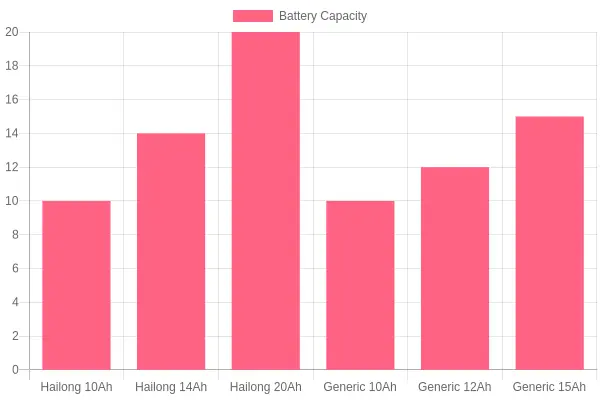
This chart compares battery capacities across different types.
| Battery Type | Voltage | Capacity | Model Examples |
|---|---|---|---|
| Hailong | 36V | 10Ah, 14Ah, 20Ah | Hailong 36V 10Ah |
| Generic | 36V | 10Ah, 12Ah, 15Ah | Generic 36V 12Ah |
For detailed compatibility guides, consider exploring related models and reviews.
Recent Trends in the E-Bike Battery Controller Industry
As the e-bike industry continues to rapidly evolve, recent trends in the battery controller market reveal significant growth prospects and advancements in technology that could substantially influence business decisions. Here, we summarize the prominent trends impacting the industry:
Market Growth and Projections
The e-bike battery market is expected to see substantial growth in the coming years, projected to reach USD 29.72 billion by 2035. This growth is characterized by a CAGR of 10.71% from 2025 to 2035, highlighting the increasing demand for e-bikes and innovative battery solutions. Learn more about market forecasts here.
Technological Advancements
The industry is witnessing a wave of technological advancements aimed at improving battery efficiency, performance, and safety. Key innovations include:
- Enhanced Energy Density: New materials and designs are being researched to increase the energy density of e-bike batteries, allowing for longer rides without recharging.
- Smart Controllers: Modern battery controllers equipped with smart technology can optimize energy use and provide real-time diagnostics.
- Improved Safety Solutions: Following recent safety concerns regarding battery fires, the industry is focusing on developing better thermal management systems and fire-resistant materials.
Regulatory Environment
As highlighted by Techturning, safety regulations are becoming increasingly stringent due to rising incidents of battery fires. Businesses will need to adapt to these regulations by enhancing safety protocols in their battery management systems.
Regional Insights
The Asia Pacific region is set to hold a significant market share due to extensive investments in e-bike technology and supportive government policies. Countries like China are leading the charge, influencing global market conditions. Reports indicate a rising investment interest in R&D for battery technology, focusing on innovations that enhance sustainability and performance.
Conclusion
In summary, the e-bike battery controller industry is at a pivotal point of growth, driven by technological advancements, rising demand, and shifting regulatory landscapes. Business owners should closely monitor these trends to make informed decisions on product offerings and navigate the evolving market landscape.
For further insights on e-bike technologies, check out our blog on the latest in electric bikes.
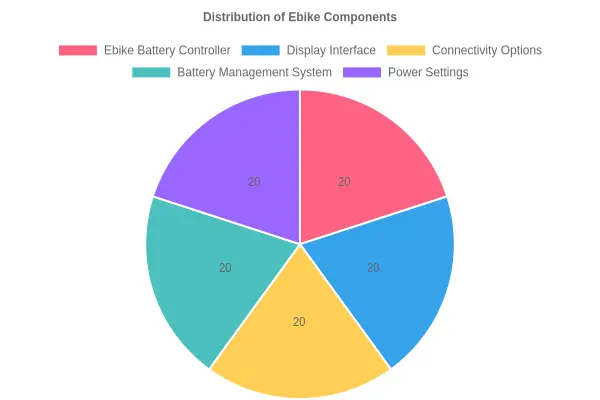
This image visually represents the technology behind ebike battery controllers, highlighting various components such as the battery management system, display interface, connectivity options, and power settings. Each component plays a crucial role in ensuring the efficient operation of an ebike. This pie chart illustrates the importance and distribution of these components in the overall system.
Expert Insights on E-Bike Battery Controllers
One of the key components in the performance and reliability of e-bikes is the battery management system (BMS). It plays a critical role in enhancing battery life and safety, integral for businesses in the e-bike industry who wish to boost customer satisfaction and retention.
A notable insight comes from the article “E-Bike Batteries 101 – All You Need To Know” by Bikexchange:
“Modern lithium-ion batteries can last anywhere from 2 to 5 years, depending on charge cycles, which is integral for the e-bike business model’s sustainability and profitability.”
This highlights how a robust BMS not only protects against faults but also maximizes battery longevity, thus influencing the overall cost-effectiveness for business owners.
Another relevant statement can be found in the article “What Are the Latest Innovations in Lithium eBike Battery Technology?” from Redway Tech:
“Advancements in recycling technology that help mitigate the environmental impact of lithium batteries contribute to a circular economy through efficient recycling processes.”
This emphasizes the growing importance of sustainable practices in the e-bike sector and the potential competitive advantage businesses can gain from adopting such technologies.
Understanding the impact of these systems on both product performance and overall market position is crucial for business owners in the evolving e-bike landscape.
Best Practices for Installing Ebike Battery Controllers
When it comes to installing ebike battery controllers, adhering to best practices is crucial for optimizing performance and ensuring safety. As a business owner, you want to ensure that your setup not only functions well but is also reliable and user-friendly. Below are several essential best practices to consider during the installation process.
1. Choose the Right Location
- Accessibility: Ensure the battery controller is located in an easily accessible area. This makes it easier for maintenance and troubleshooting.
- Secured Mounting: The controller should be mounted securely to avoid any movement during the ride, which could lead to damage.
- Protection from Elements: If possible, choose a location that offers protection from water and dust. Consider using enclosures or protectors to shield the controller from environmental hazards.
2. Follow Manufacturer Guidelines
- Each controller may have specific installation requirements. Be sure to read the manufacturer’s instructions thoroughly. Utilizing resources such as Wiring and Battery Installation for Your EBike can provide valuable insights.
- Familiarize yourself with the wiring diagrams provided by the manufacturer. This ensures that you connect the controller correctly to avoid any short-circuiting or malfunctions.
3. Use Quality Wiring
- Invest in high-quality, appropriately sized wiring that can handle the currents expected in your ebike system. This minimizes the risk of electrical failure.
- Cable Management: Practice good cable management by securing and routing wires properly. Use zip ties or cable wraps to keep wires tidy and prevent potential snagging during operation.
4. Test Connections
- Before fully securing your installation, test all connections to ensure that everything is functioning correctly. Check for proper operation of the throttle, brakes, and other controls integrated with the battery controller.
- Use a multimeter to check voltage and connections for continuity to detect any issues before the final setup is complete.
5. Ensure Adequate Ventilation
- Battery controllers can heat up during operation. Therefore, it’s important to install the controller in a well-ventilated area to prevent overheating. Consider elevating the unit or using fans if necessary to promote airflow.
6. Regular Maintenance Checks
- Schedule regular maintenance checks, especially if your ebikes are used frequently. Check all connections, wiring integrity, and operational functionality periodically to address wear and tear.
- Keep an eye out for any corrosion or damage to connections which could lead to failures. Ensure that your staff is trained on how to conduct these checks effectively.
7. Documentation and Knowledge Sharing
- Maintain detailed documentation of installation procedures, wiring diagrams, and any modifications made during installation. This information is vital for future troubleshooting or system upgrades.
- Encourage knowledge sharing among your team members to promote better installation and maintenance practices. Resources like Ebike Battery Installation can serve as excellent training material.
Conclusion
Implementing these best practices when installing ebike battery controllers can help your business provide reliable and high-performing ebikes to customers. Always prioritize safety and efficiency in your installations for the best user experience. For further guidance on enhancing your product offerings, check out our guide on electric scooters for adults.
Conclusion: The Vital Role of Ebike Battery Controllers in Business Success
In today’s rapidly expanding electric bike (ebike) market, battery controllers serve as crucial components that directly influence operational efficiency and product quality. A well-functioning ebike battery controller not only ensures that the ebike operates optimally but also extends the lifespan of the battery, which can enhance user satisfaction and reduce operational costs for businesses.
The importance of battery controllers was underscored in various studies, which highlighted that without a properly functioning battery controller, an ebike may not perform efficiently. This inefficiency can lead to a range of issues, including reduced battery life and poor user experience, thereby affecting a business’s reputation and customer satisfaction. For instance, Sipanipower mentions that the longevity of an ebike’s battery, directly managed by the controller, is essential for the success of any ebike enterprise.
Furthermore, advancements in battery technology-like those mentioned by Rad Power Bikes-are setting new safety and efficiency standards. As battery management systems evolve to optimize battery performance through intelligent algorithms, businesses must adapt to these innovations to stay competitive in the market.
The compatibility of battery controllers with the ebike’s voltage and specifications is also vital for maximizing performance, ensuring safety, and optimizing user experience. This highlights that investing in high-quality battery controllers can lead to substantial returns for businesses through enhanced product reliability and consumer trust.
In summary, the necessity of ebike battery controllers cannot be overstated. They not only impact a vehicle’s performance but also play a critical role in defining the market success and longevity of ebike ventures. As technology continues to advance, staying informed about these crucial components will pave the way for sustainable growth and success in the ebike industry.